

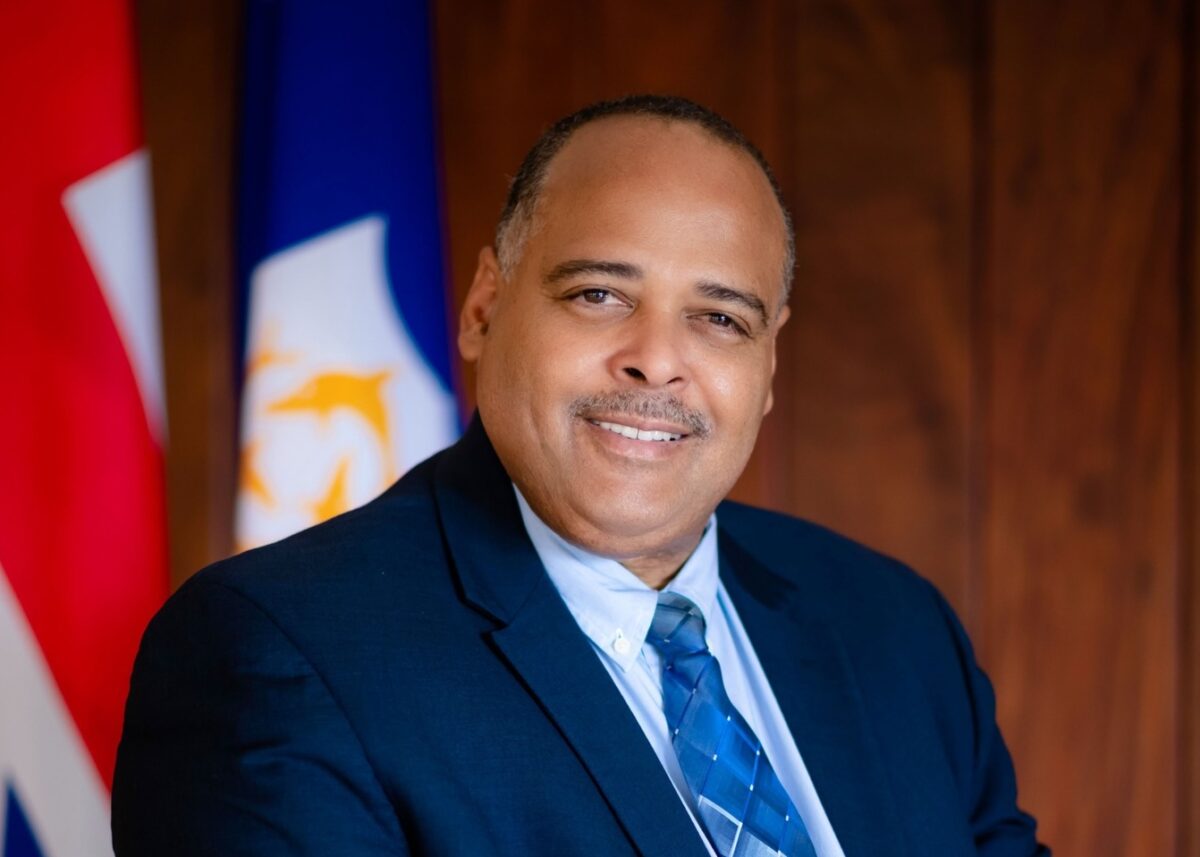
Opposition leader calls for use of reserves to ease Anguilla’s rising costs

Anguilla’s opposition leader has urged the government to deploy its multi-million dollar reserves to fund a package of cost of living relief measures.

In a national address on 25 March, Ellis Webster argued that the money was saved precisely for periods of economic strain such as the present, as geopolitical tensions drive up the price of oil.

Among the proposals he outlined are reductions in import duties on essential goods, a cap on freight costs passed on to consumers, and the expansion of electricity credits.

Get members-only articles and editorials, giveaways and discount codes with Anguilla Focus. Click here to join from just $4/month.

Webster also called for a reduction or removal of the universal stabilisation levy to increase take-home pay for workers and ease pressure on businesses.

He said the measures could be sustained for at least 12 months without significant risk to public finances, framing the issue as a question of political will rather than financial constraint.

A pot of cash

In his address, the former premier said that when he left office in February 2025, Anguillas’ reserves, which were built through “difficult, sometimes unpopular decisions”, stood at more than $300m.

“Reserves exist so that when the world outside Anguilla makes things harder for us – rising global prices, supply disruptions, energy shocks – the government can stand in the gap for its people.”

He said that based on those figures, a structured relief package could be sustained for a “minimum of 12 months, and realistically 18 months”, without significant risk to public finances.

“The money is there. The only question is whether it will be used for the people it was saved for rather than unnecessary expenses overseas,” he said, referencing the proposed Anguilla office in London.

He added: “We stand in an era marked by global instability, looming existential crises and the cyclical threats of natural disasters that continue to test the resilience of our people.

“In such a moment, governance cannot afford to be routine, it must be bold, innovative and intentional.”

A relief package

The opposition leader proposed that the government reduce import duties on essential goods to ease the impact of rising global prices on Anguilla’s families at the checkout.

He also suggested capping freight costs for essential goods that are passed on to consumers in order to lower prices and help businesses manage rising shipping expenses.
ANGLEC corporate office in The Valley. (Anguilla Focus/2026)

Expanding electricity credits to provide equitable support across households and businesses without requiring new borrowing was another recommendation.

Webster further called for reducing or removing the universal stabilisation levy – a 3% charge on the gross salary or wages of all employees earning over $2,000 per month to give workers more take-home pay.

Finally, he proposed a direct government investment in ANGLEC to reduce reliance on imported fossil fuels and external loans.

This, he said, would support the transition to renewable energy, lower power prices and strengthen Anguilla’s wider economy.


Leave a Reply

Your email address will not be published. Required fields are marked *