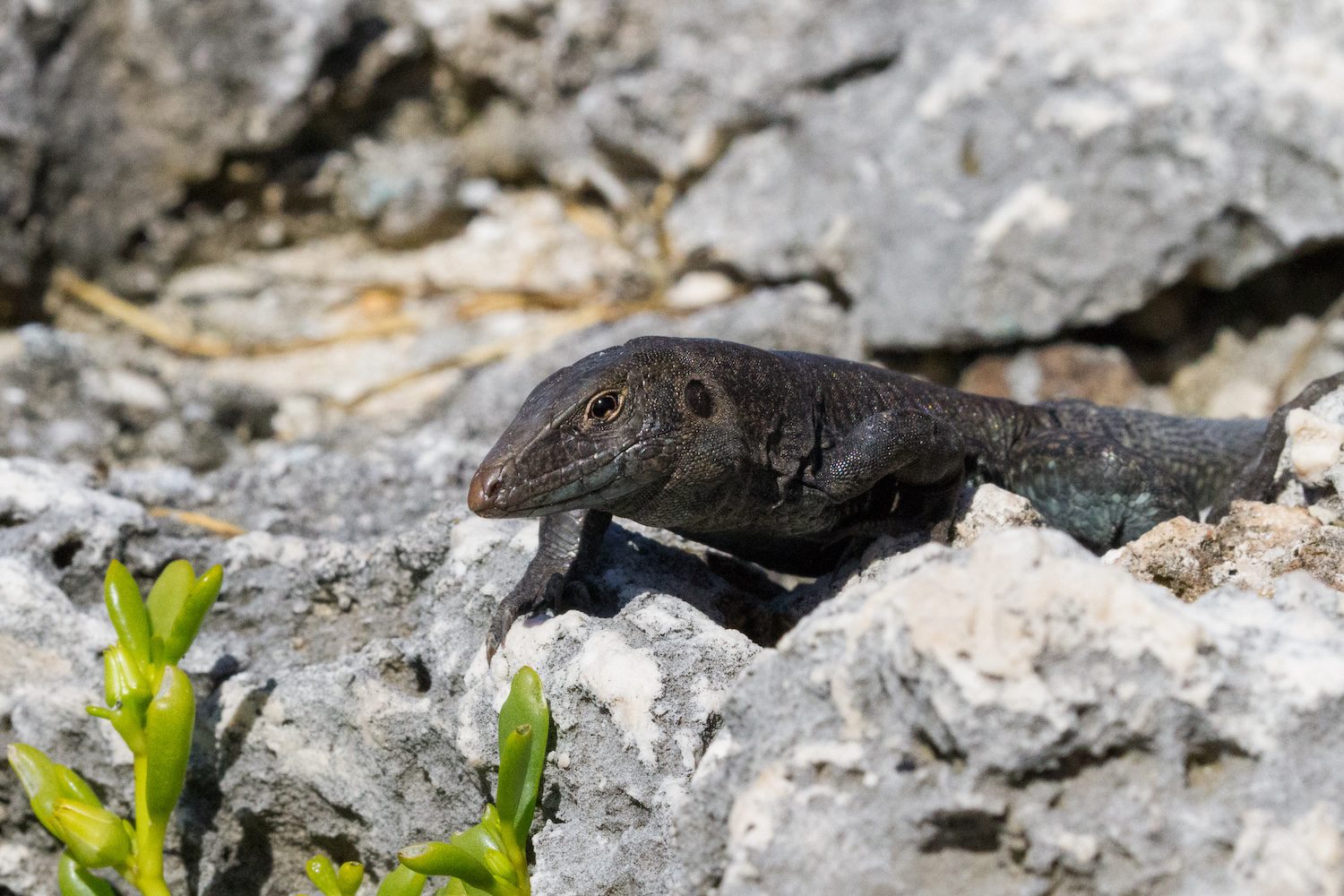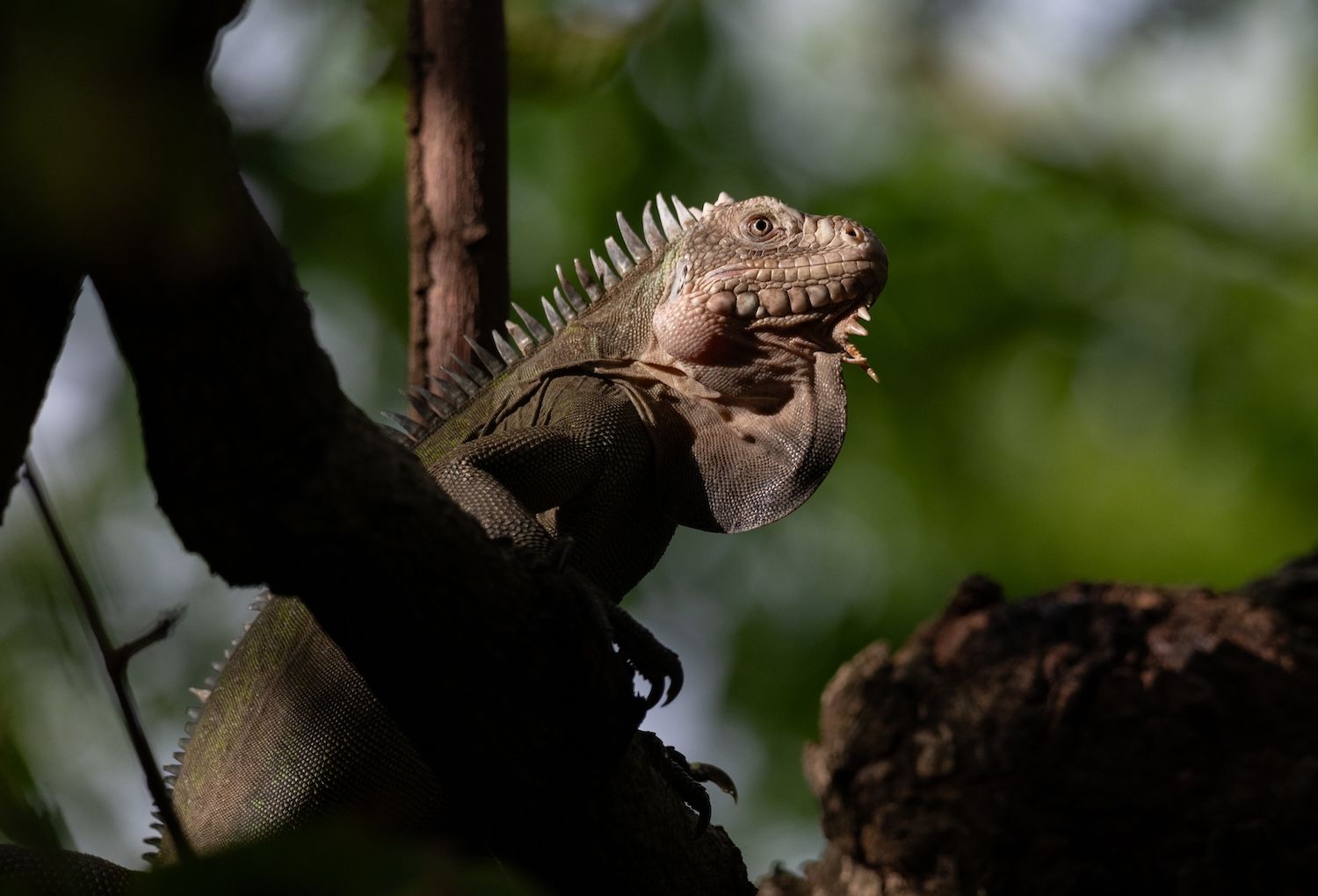
The small and uninhabited islet of Prickly Pear East is not what you might describe as a romantic holiday destination where young hopefuls go to find love.
But for the Lesser Antillean iguana, it has proved to be just that.
Thanks to an ambitious programme of cross-Caribbean matchmaking, a new population has been successfully established on the island, with numbers now rapidly increasing.
Get members-only articles and editorials, giveaways and discount codes with Anguilla Focus. Click here to join from just $4/month.
The Lesser Antillean iguana is a critically endangered species that has disappeared from much of its range across the Eastern Caribbean.
Among the greatest threats are invasive alien species, particularly the common green or striped-tailed iguana, a press release from the Fauna and Flora global conservation charity said on 18 December.
These grow up to two metres long, breed fast and hybridise with or outcompete the Lesser Antillean iguana. They can also spread diseases that debilitate and kill the native reptiles.
A new home
In 2016, conservationists from the Anguilla National Trust began translocating the last Lesser Antillean iguanas from the mainland – 23 in total – to the alien-free islet of Prickly Pear East.
Realising that such a small population could suffer from inbreeding, the conservation team reached out to the Forestry, Wildlife and Parks Division in Dominica.
They requested some young Lesser Antillean iguanas from Dominica to boost the genetic diversity of the iguanas on Prickly Pear East.

The Government of Dominica agreed, and permits were secured, while funding was made available from the UK Government through Darwin Plus.
Ten healthy young Lesser Antillean iguanas from Dominica, chaperoned by their supporting crew of conservationists, boarded a small plane in early 2021 and jetted off to Anguilla to find a mate.
The “love-hopeful iguanas” were released on Prickly Pear East to start their new life and help save their species, Fauna and Flora said.
A population boom
Less than five years on, new survey data has revealed that the efforts are paying off, with more than 300 adults and adolescents counted.
The island now represents one of only five sites in the world where Lesser Antillean Iguanas are thriving, safe from invasive alien iguanas.
Jenny Daltry, Caribbean alliance director at Fauna and Flora and US conservation group Re:wild, said: “The Lesser Antillean iguana is making a comeback in Anguilla.
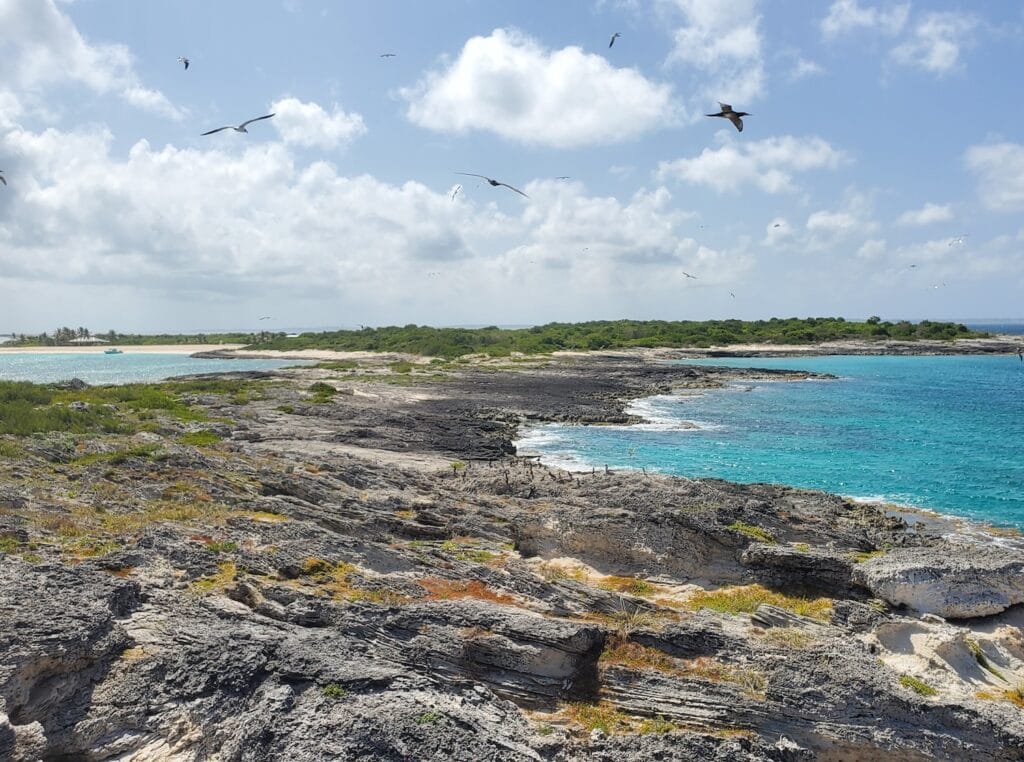
“Prickly Pear East has become a beacon of hope for these gorgeous lizards – and proves that when we give native wildlife the chance, they know what to do.”
With hopes of building on this success, a second reintroduction site for Lesser Antillean iguanas has been established by the Anguilla National Trust on mainland Anguilla with support from Fauna and Flora and Re:wild.
Fountain National Park has been encircled by a pest-resistant fence to exclude harmful invasive species, including cats, dogs and common green iguanas.
It is hoped that Lesser Antillean iguanas will be reintroduced to this sanctuary in 2026, with some of the founders to be translocated from Prickly Pear East.
A love story
Farah Mukhida, executive director at the Anguilla National Trust, said: “This is a love story not just of iguanas trying to re-establish their population, but of Anguilla’s people working to restore a part of our natural heritage.”
She described them as an “important part of Anguillan culture” and said conservationists hope to both re-establish the iguana’s natural ecosystem function and help people to reconnect with nature.
The engagement of local communities has been essential to the success of the project from the outset, Fauna and Flora said in the press release.
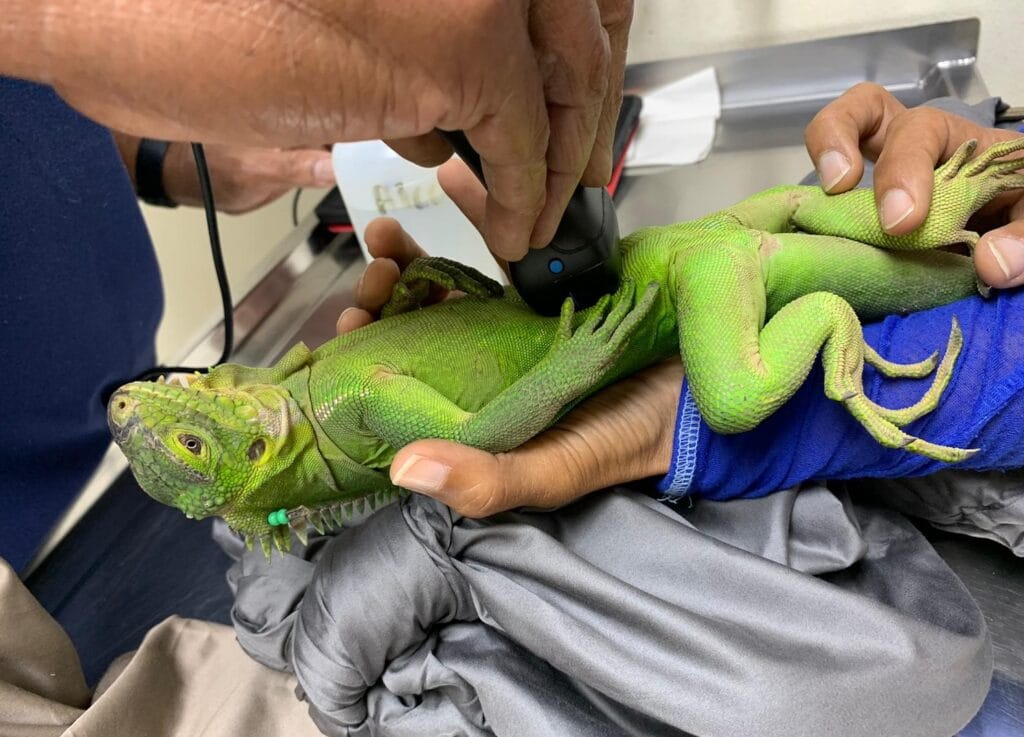
When the Anguilla National Trust first started its iguana conservation work, Anguillan residents assisted by reporting iguana sightings, allowing the field team to target their search efforts.
Local volunteers also helped to care for the iguanas while in captivity for genetic testing pre-release, and they supported with the translocations in 2016 and 2021, alongside additional volunteers from Dominica.
Dominica’s forestry personnel have also played a crucial role in the recovery, showing the importance of cross-border collaboration for conservation efforts.
Critically endangered
The Lesser Antillean iguana is critically endangered with a global population of less than 20,000 adults, and falling.
Originally found on many of the islands of the Lesser Antilles, the species is now extinct on Antigua, Barbuda, St Kitts, Nevis and St Martin, and has disappeared across most of Guadeloupe, St Barts and Martinique.
St Eustatius has also reported a severe fall in numbers in recent years.
Originating in Central and South America, green or stripe-tailed iguanas were first introduced from French Guiana to Guadeloupe in the 1800s, where they flourished at the expense of the native species.
They spread further in 1995, when Hurricane Luis swept dozens of the alien iguanas from Guadeloupe to Anguilla, Antigua, Barbuda, St Barts and St Martin, and have continued to multiply ever since.
The iguanas were accidentally introduced to Dominica with relief supplies after Hurricane Maria in 2017.
Re:wild, Fauna and Flora and other members of the Lesser Antillean Iguana Working Group are supporting ongoing efforts in Dominica to remove the common green iguanas and hybrids.
More information on collaborative efforts to conserve wildlife of Anguilla is available here.