
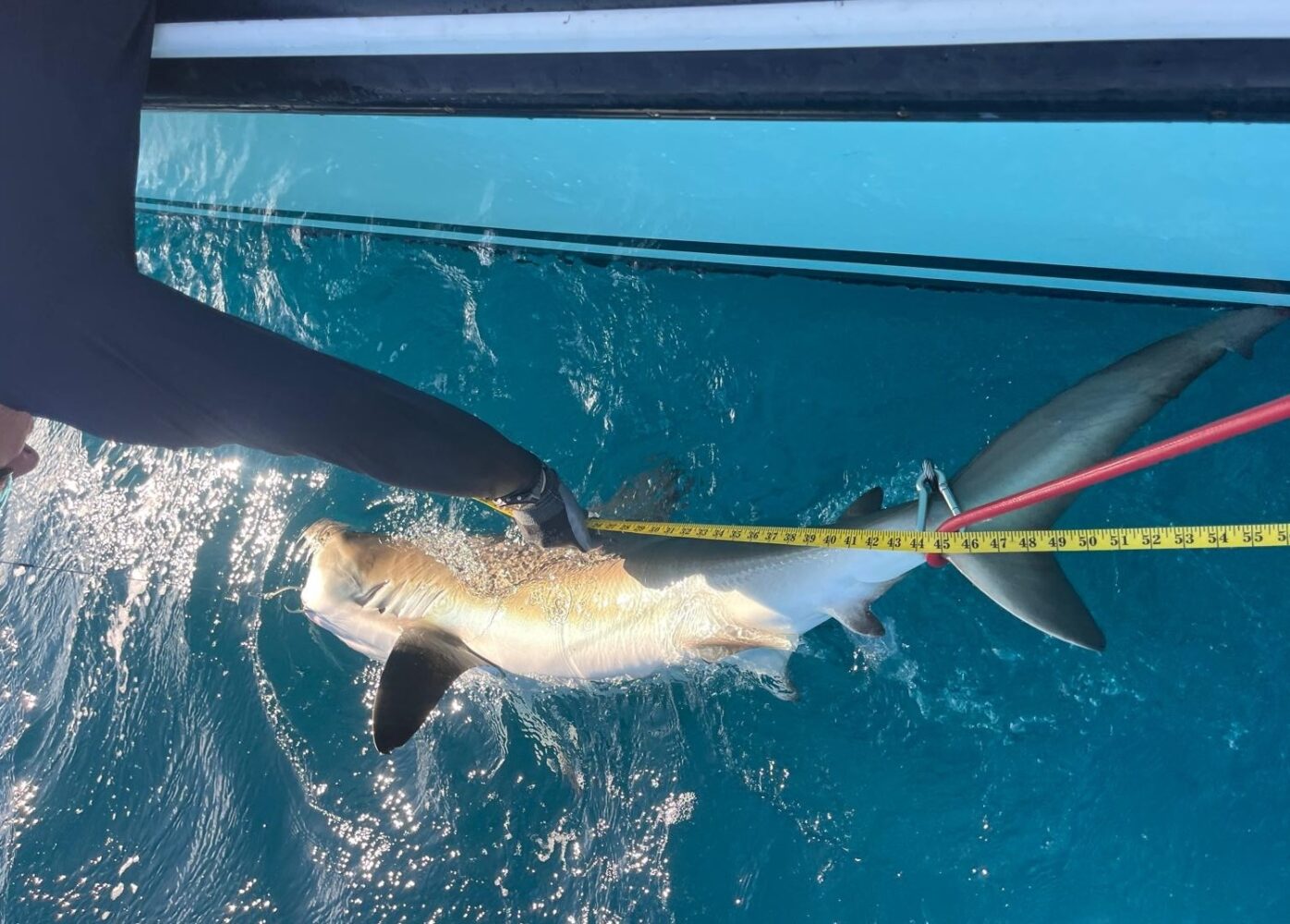
Marine scientists have installed listening stations in the waters around Anguilla to track signals from tagged Caribbean reef sharks.
The technology will allow for the monitoring of movements, behaviour and habitats, providing valuable data to support the protection of the endangered species.
The project is being run by the Anguilla National Trust in collaboration with the Fisheries Unit in the Department of Natural Resources and Dr Matthew Witt from the University of Exeter.
Get members-only articles and editorials, giveaways and discount codes with Anguilla Focus. Click here to join from just $3/month.
It is funded through a £50,000 grant from the United Kingdom government’s Biodiversity Challenge Funds‘ Darwin Plus local initiative.
Dr Witt visited Anguilla in November to help deploy the stations – provided by Dalhousie University’s Ocean Tracking Network – both inside and outside of Anguilla’s marine parks.
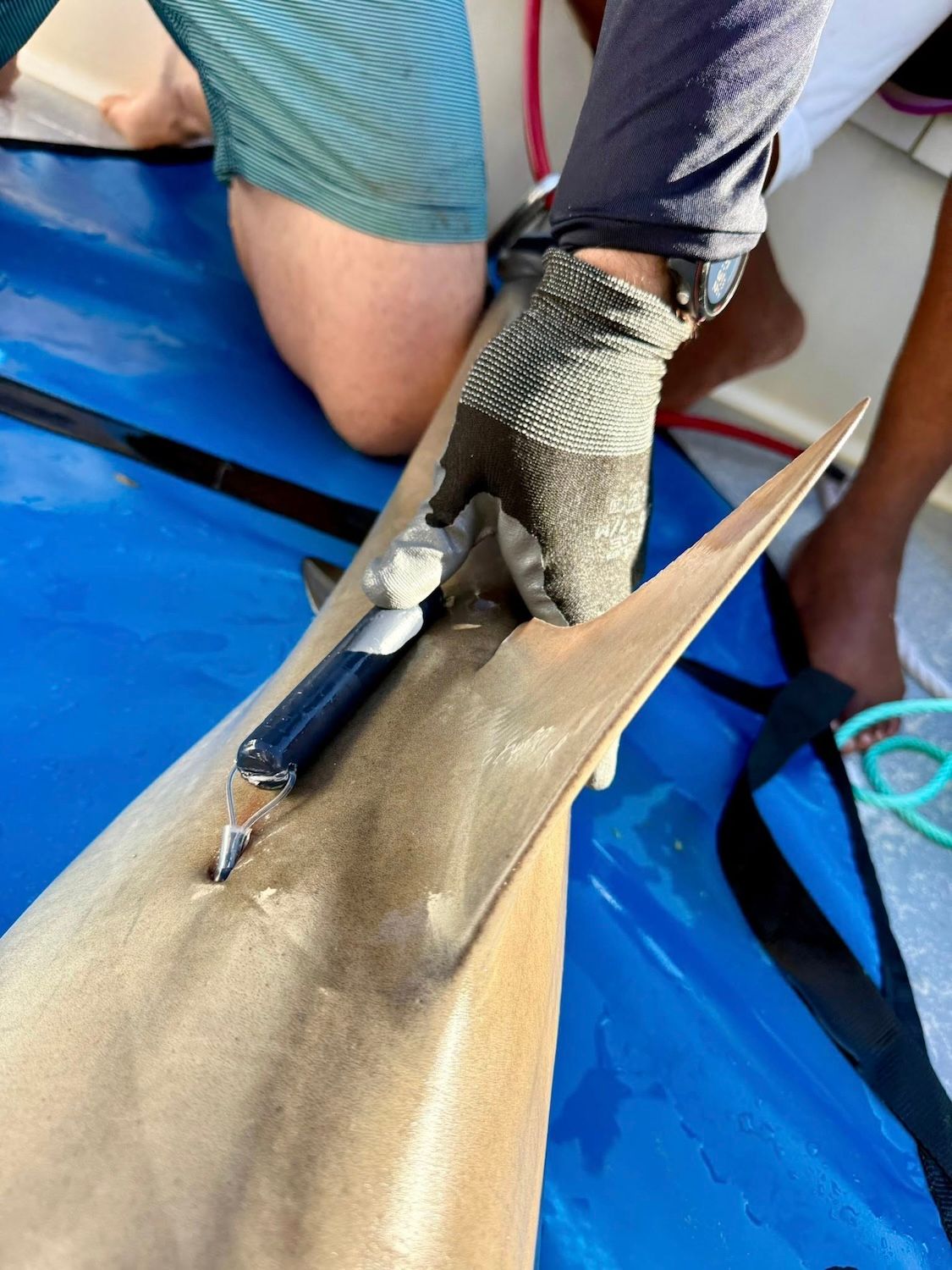
“We’re hoping to monitor and better understand the movements and ranges of our endangered Caribbean reef sharks,” the Anguilla National Trust said in a Facebook post.
“With ten sharks tagged so far, the acoustic stations will pick up the signals from these tags, collecting and storing critical movement-related data.”
A second phase of shark tagging will take place next May to expand the dataset.
The work builds on a four-year Darwin Plus-funded Anguilla Shark Conservation Project which saw the installation of baited underwater video stations to identify shark species and assess their health.
Four shark species were formally recorded in Anguilla for the first time, including the Atlantic sixgill shark, sandbar shark, Cuban dogfish and the smooth-hound shark.
This led to the development of a Shark Research Action Plan – a blueprint for future monitoring, habitat protection, sustainable fisheries and possibly new legislation or protections.